
Since I started mediating, I’ve become a better listener, I’ve become a better friend, I’ve become a better family member, and I’ve definitely become a better lawyer.
That was me talking! My colleague, Antoinette DelRuelle, and I are featured on this week’s podcast episode of The Other Chair from the Center for Understanding in Conflict (CUC). Antoinette and I are going to be part of the team that is teaching CUC’s East Coast mediation intensive in June 2025.
In the podcast, we talked about:
- The different mindset from being a litigator to being neutral
- What it takes to become a mediator
- Why mediation training is useful for nonlawyers as well as for lawyers
- Problem-solving in mediation vs in litigation
- The difference between CUC trainings and other kinds of training
- Why an in-person, intensive training is beneficial
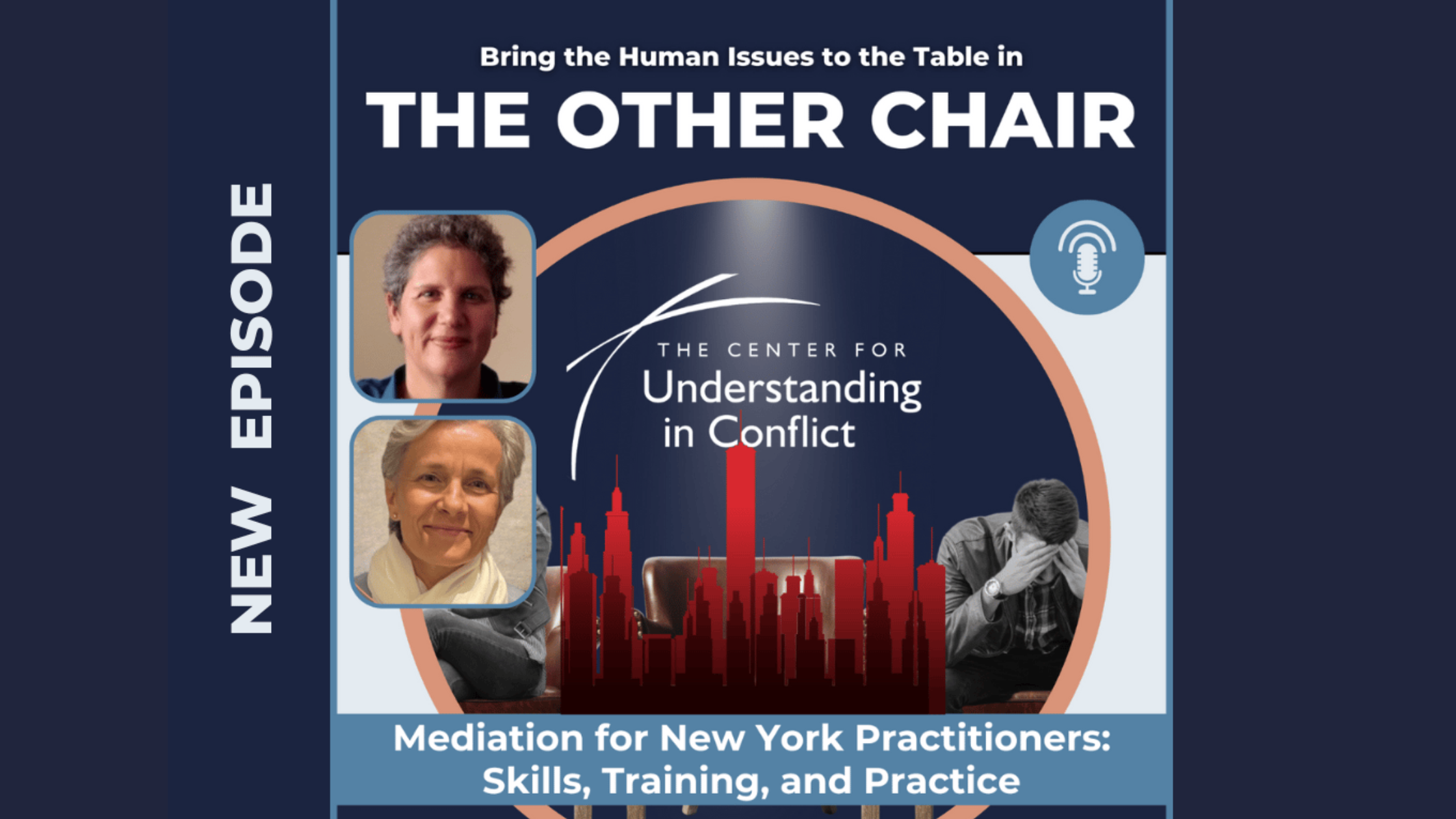
This episode is a thinly-veiled plug for the upcoming program training. This 40-hour program is broken down into 2 parts – a 24-hour training on basic mediation skills, and a 16-hour training on New York Divorce Law for mediators. (I’ll be co-teaching the latter). You can take one or the other or both. It will take place in person at the Highlights Retreat Center in the Poconos. (Remember Highlights Magazine for kids?) Click on the button if you want to know more:
I took several basic mediation trainings when I first got started, and CUC’s was the best by far. I also took CUC’s class on NYS divorce law for mediators, which was really important for my work. I’d highly recommend the training for therapists, rabbis, ministers, or anyone who works with families, for people who do financial advising, or divorce coaching, or for lawyers who want to increase their negotiation skills or better support their clients in mediation.
Please share this with anyone you think might be interested. Or better yet, come join us in Pennsylvania! You’ll learn a lot, be in a beautiful place with an inclusive community of nice, smart people, and we will have fun!