
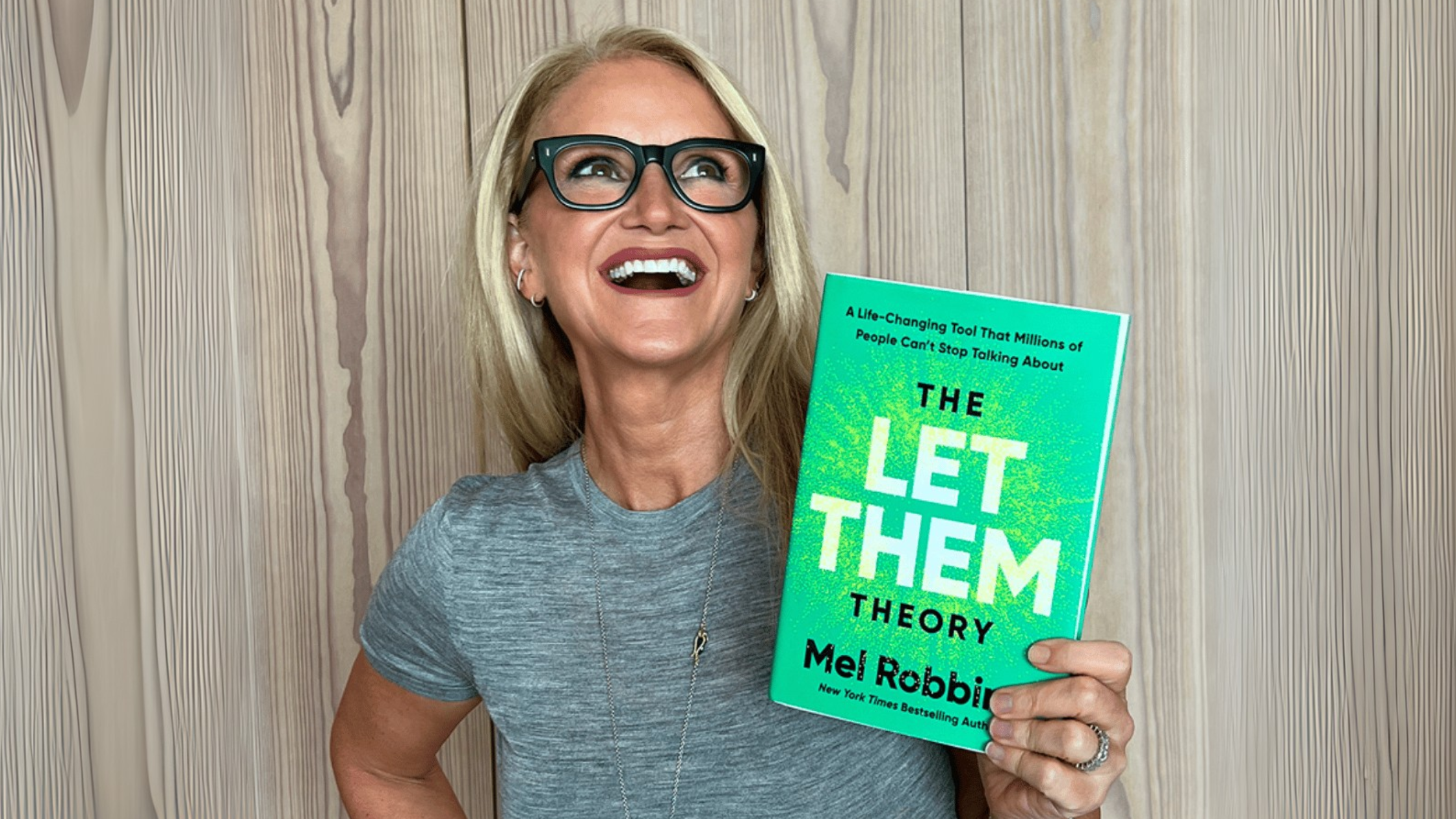
Mel Robbins with her book, the LET THEM Theory
When I was working with teenagers in foster care, I used to tell them, ‘You can’t control anyone else, you can only control yourself – and your reactions to others.’
Mel Robbins, a brilliant and popular author and speaker, and podcaster, has boiled this concept down to two words: Let them. Her latest book, The Let Them Theory, is #1 on the New York Times bestseller list for Advice and #1 on Audible.com right now. Mel has a very relatable tone and way of writing. She sounds like your kind, supportive, and smart friend. (So I think of her as Mel, rather than Ms. Robbins!)
The basic concept is that if other people are making what you think are bad choices or acting like jerks, let them. You can’t control them, and you’ll drive yourself crazy trying. It will make you more anxious and tie your undies in a bundle. So let it go.
This isn’t anything new – it’s just true, when you think about it. But it is a powerful thought. And it is liberating. She says it brings peace to your life because you’re not fighting the current and swimming upstream. And it brings peace to their lives, because you are letting them be (and show you) who they are. (Boy, there are so many times in my life when I could have used this advice!)
Mel goes further, though. The next step is Let me. Once you let go of trying to control someone else’s reactions, you have to deal with your own. And that takes introspection and self-control. As in, ‘Let me figure out how I want to respond. Let me take actions that are true to my values. Let me be in control of myself.’ And that, in many ways, is harder.
There are 3 times when Mel says NOT to use the let them theory, when it IS appropriate to intervene:
- When someone is in danger of harm (or harming others)
- When you or someone else is being abused, oppressed, or bullied
- When someone is violating your personal boundaries
At the end of the book, Mel has a short section on using the Let Them Theory as a parent, with a link to a guide she created with Dr. Stuart Ablon, a psychologist who focuses his work on children with behavior challenges by doing collaborative problem solving with them. They developed a guide on Parenting with Let Them, which you can access here.