
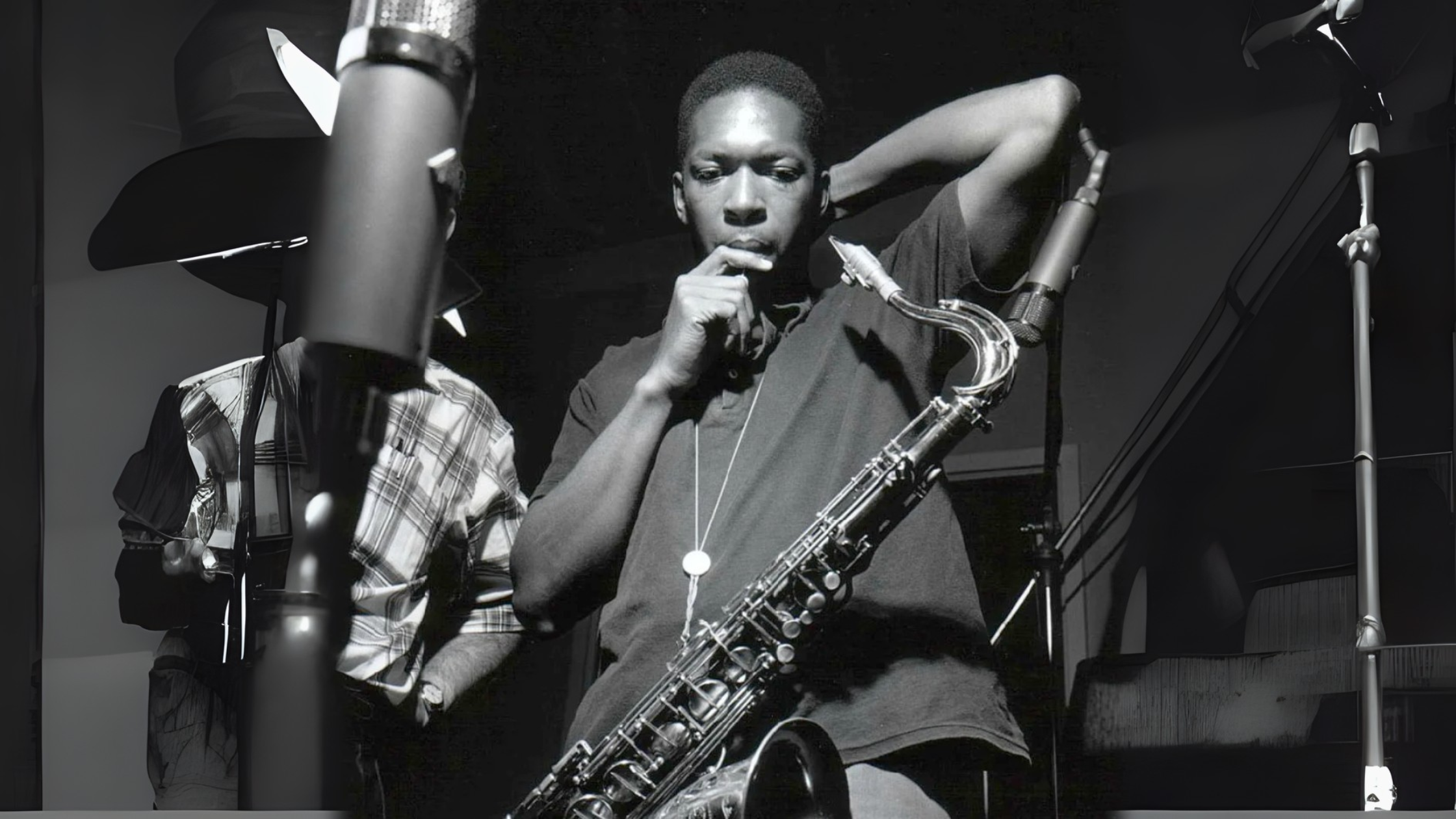
Photo from johncoltrane.com
This week (Sept 23rd) was the birthday of the great tenor saxophonist, John Coltrane, who would have turned 99. Coltrane was one of the most revered and influential jazz musicians of the 1950s and ’60s. He recorded beautiful ballads like Lush Life and In a Sentimental Mood, reinvented show tunes like My Favorite Things, and he was always pushing the boundaries of how to use music to express the pain and joy of human existence. He incorporated his spiritual evolution into his work. His masterpiece, A Love Supreme, begins as a melodic prayer and unfolds into a profound 4-section suite, all devoted to the Creator.
I know that there are bad forces, forces that bring suffering to others and misery to the world. I want to be the opposite force. I want to be the force which is truly for good. ~ John Coltrane
Sept 15th was also the anniversary of a dark Sunday in 1963 when, just weeks after the March on Washington, the Ku Klux Klan bombed the 16th Street Baptist Church in Birmingham, Alabama, killing 4 children who were preparing for church: Addie Mae Collins, Carole Robertson, Cynthia Wesley and Carol Denise McNair. The church was a hub of civil rights activity – hate-filled violence is anything but new in our country. The horror of the event became a flashpoint for the civil rights movement. Over 3,300 people attended the funeral, including 800 members of the clergy. Dr. Martin Luther King, Jr. gave the eulogy.
Shortly after the church bombing, Coltrane recorded a track simply named Alabama. He wrote nothing about the piece, assuming his fans would know what it was about.
My brother, Steve Rowland, created a 5-hour radio documentary about John Coltrane called “Tell Me How Long Trane’s Been Gone,” narrated by the great poet, Michael S. Harper. The documentary was released in honor of Coltrane’s 75th birthday in 2001 — just a week before 9/11. It aired on over 400 NPR stations. Many listeners found solace in Coltrane’s story and message. One section of the show explores the relationship between Dr. King’s eulogy and Trane’s melody – and whether Trane based the cadence of the song on Dr. King’s words. You can hear it here and decide for yourself.
So this week, I am thinking about Trane’s ability to use music as a form of nonviolent protest, by encapsulating the horror and sorrow of the moment while creating something beautiful and lasting that touches our souls.
African American music has always been about creating beauty from hardship – just think about the blues! But this piece seems especially so. And so I share it with you. What beauty can we each make from the hardship of our lives?