
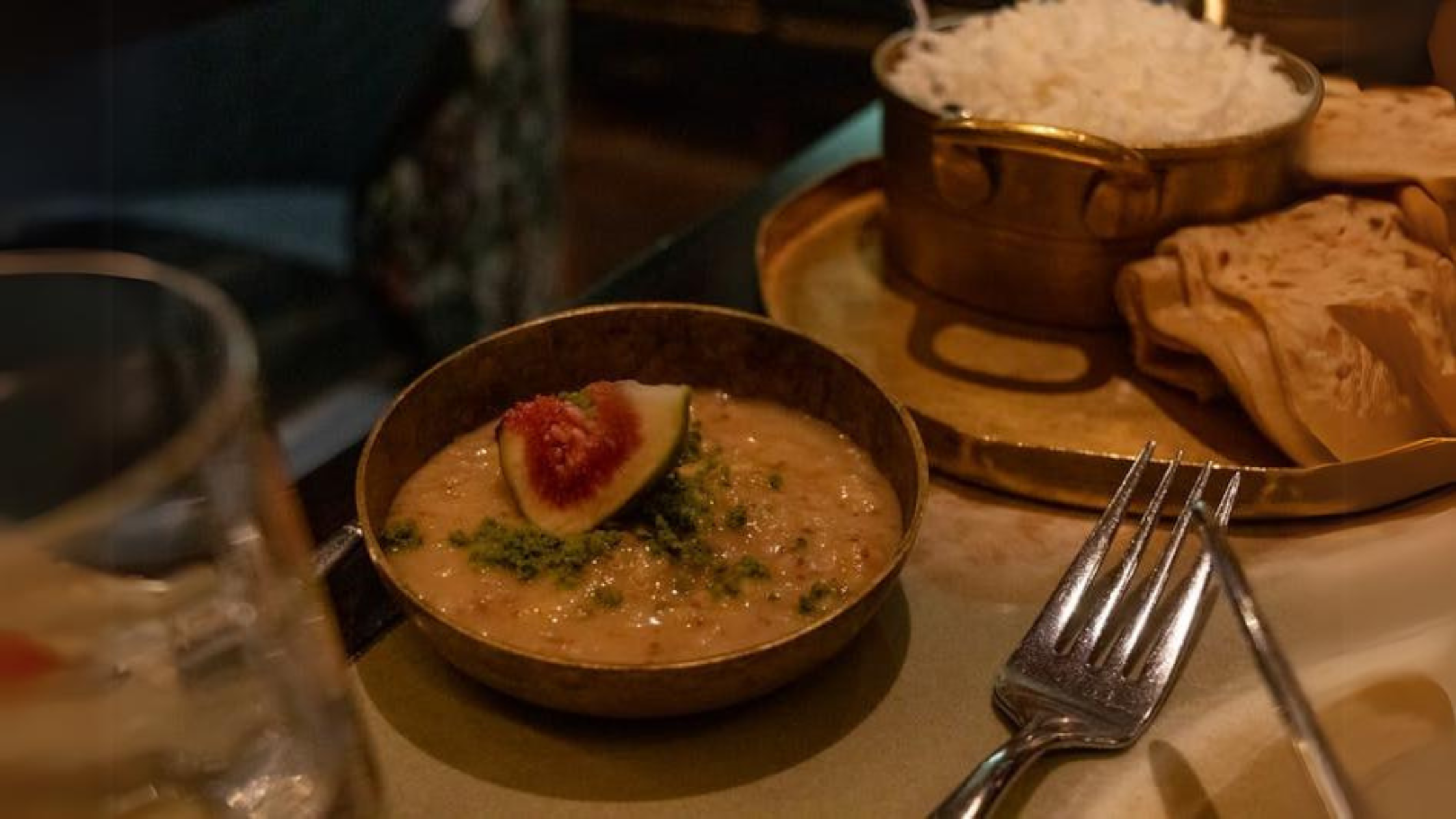
“Is this a stereotype?” I asked. “Or is it true that Indian food takes a long time to cook?” I was sitting with my friend, Sethu, in a coffee shop, and we were talking about that never-ending work-life balance. (Perhaps I should mention here that, in my mind, saag paneer and rice is about as perfect as food can get.)
“No, it’s true,” she said. “My mom taught me some tricks to make it simpler like doing food prep for tomorrow while you’re cooking for tonight, but you have to leave time to let it simmer.”
“And is that why it’s so delicious?” I asked.
“Yes.”
Sethu is a new friend in my Mediation Teacher Training Program run by the Center for Understanding in Conflict. A few days later, I was talking with Tara, another Indian American colleague who is in the same training. She and I talked about this month’s guiding principle, “Allow Tension,” and how it applies to our work. She is making some important professional decisions and was thinking about what those decisions might mean, and how she might accomplish her goals. She wasn’t putting pressure on herself to decide right away but was living with the fact that she had options and that different paths would lead to different opportunities. And that it might require a leap of faith to get to where she wants and needs to go.
“So the tension you’re allowing isn’t between clients, it’s internal – between you and yourself. Each path might lead to a different outcome, and for now, you’re ok with not choosing. Is that right?”
“Yes,” she said.
“In other words, you’re living with the not knowing,” I said.
“Yes,” she said. “And that’s not easy!”
I told her about my theory about Indian food. She also agreed. “The flavors in the curry become more complex the longer they simmer,” she said.
“So your decision-making is like cooking curry. You will make a better decision the longer you can live with the tension, the longer you can live with the uncertainty, the better your decision will be!” I suggested.
I can do things quickly and be a little impulsive. Sometimes I don’t think things through well enough. While it’s good to be nimble, I don’t always get the outcomes I expected. The next time I’m making a big decision, I will let it simmer and allow the tension of Not Knowing to make a more nuanced and complex decision.
And I’ll encourage my clients to sit with a little tension and uncertainty to help them make sure they are considering all the nuances of their decisions.
In other words, let it simmer. (Or as my dad used to say, ‘Don’t just do something, stand there!’).